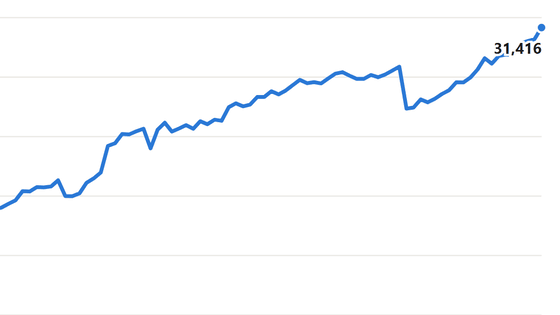
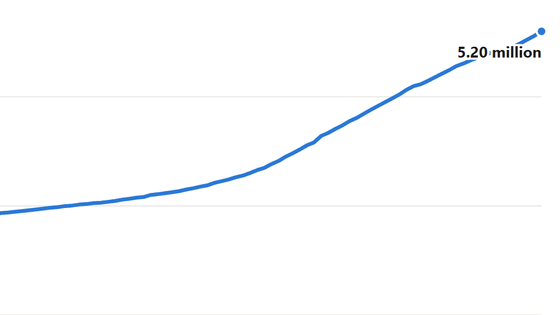
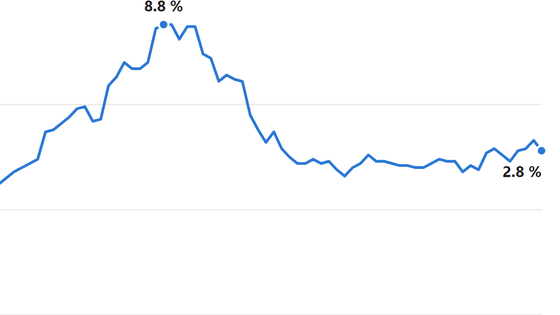
In short: In 2022, tenant households in Germany paid an average of €7.40/m² net rent (excluding all service charges) and €8.60/m² including cold service charges. In large cities it was €8.10/m², in small towns and rural areas €6.40/m². On average, 27.9 % of household net income went on rent; 16 % of tenant households paid 40 % or more. Since 1995, net rents have risen by 53 %, consumer prices by 72 %.
Average rent in Germany
The figures come from the Microcensus housing survey, carried out every four years, which covers all tenant households – including long-standing tenancies with low rents. They are therefore well below the asking rents advertised for new lets. In 2022, the average net rent was €7.40/m²: €8.10/m² in cities with 100,000 or more inhabitants, €6.90/m² in medium-sized towns and €6.40/m² in small towns and rural municipalities. Including cold service charges (water, waste, property tax, caretaker; excluding heating), the gross cold rent was €8.60/m².
| Type of municipality | Net rent | Gross cold rent | Rent burden |
|---|---|---|---|
| Large cities (100,000+) | €8.10/m² | €9.60/m² | 29.0 % |
| Medium-sized towns | €6.90/m² | €8.10/m² | 27.7 % |
| Small towns and rural areas | €6.40/m² | €7.40/m² | 26.0 % |
| Germany | €7.40/m² | €8.60/m² | 27.9 % |
Rent burden: how much income goes on rent?
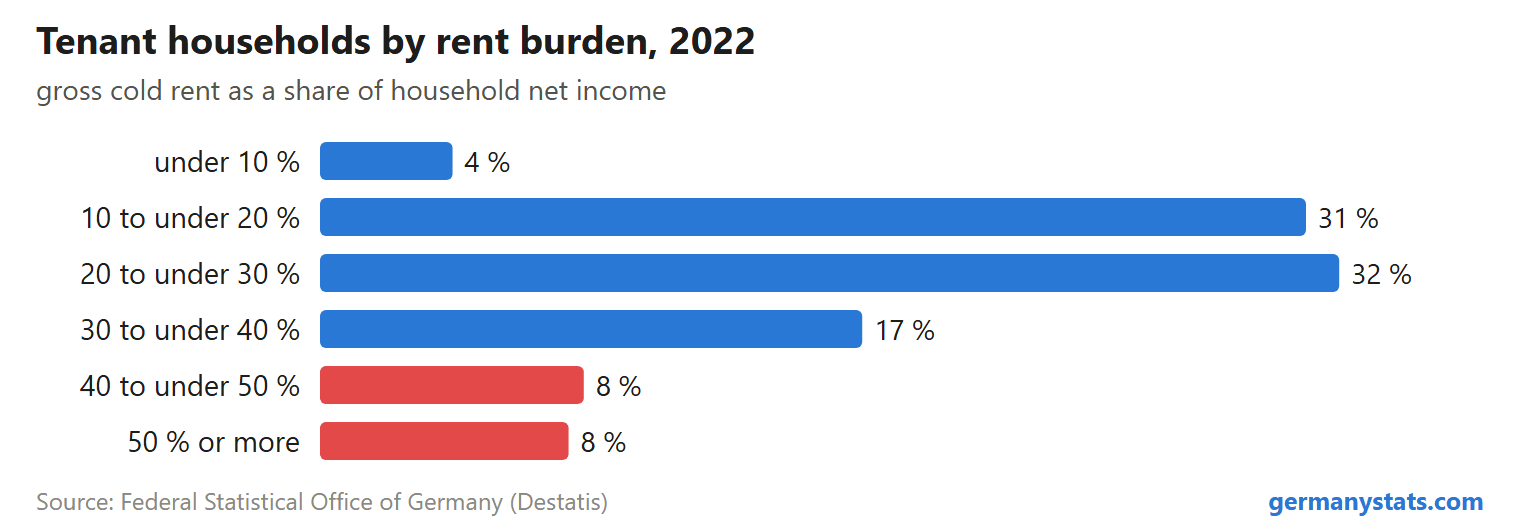
On average, tenant households spent 27.9 % of their net income on gross cold rent in 2022, 29.0 % in large cities. A burden above 30 to 40 % is considered high: 33 % of the 19.8 million tenant households paid 30 % or more, 16 % even 40 % or more. Single people and low-income households are affected most.
Rents since 1995 compared with inflation
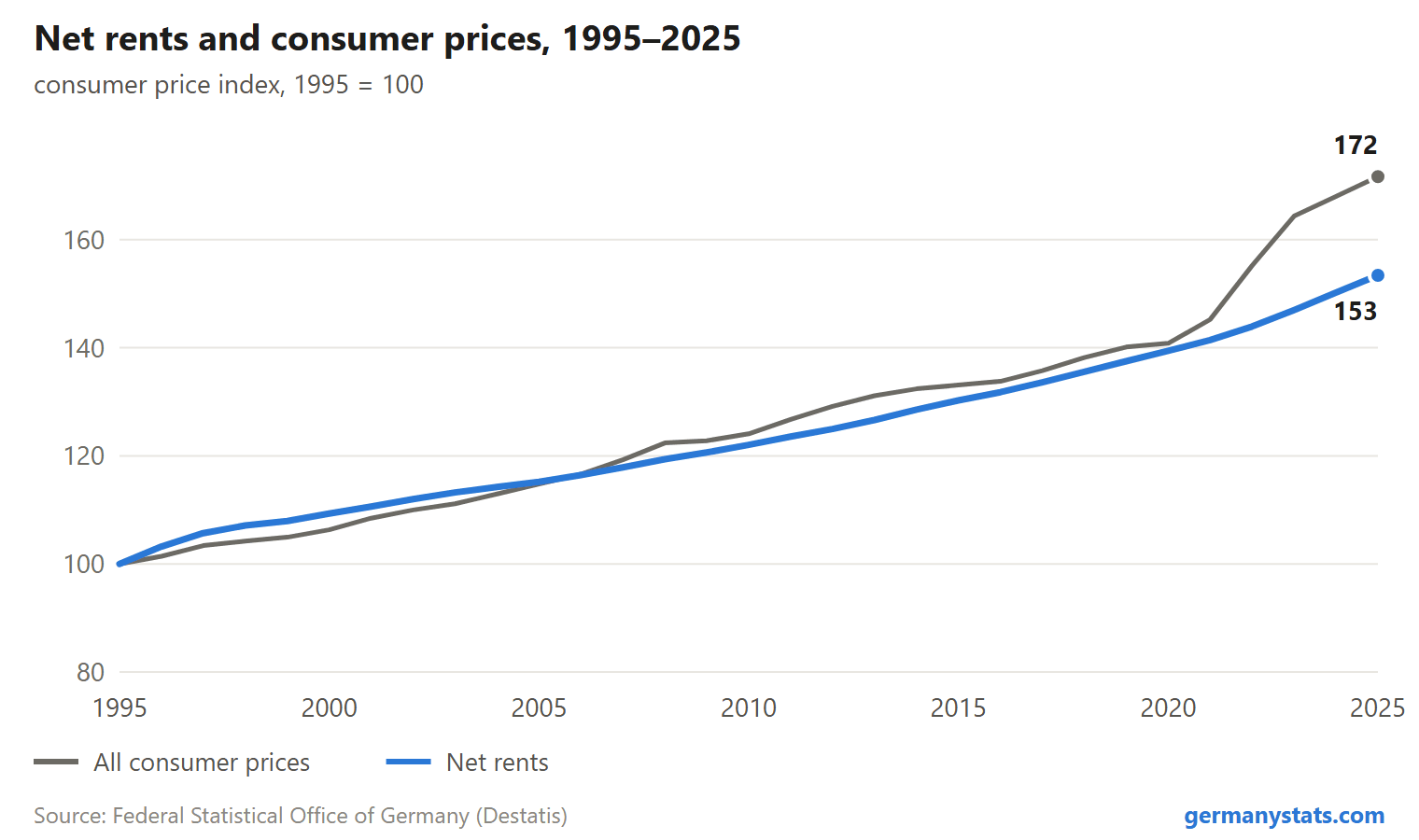
The consumer price index tracks rents for all existing and new tenancies. By this measure, net rents rose by 53 % between 1995 and 2025, more slowly than consumer prices overall (+72 %). Rents for new lets in popular cities have risen much faster; the index only partly reflects this because it includes all running contracts.
Rent increases by federal state
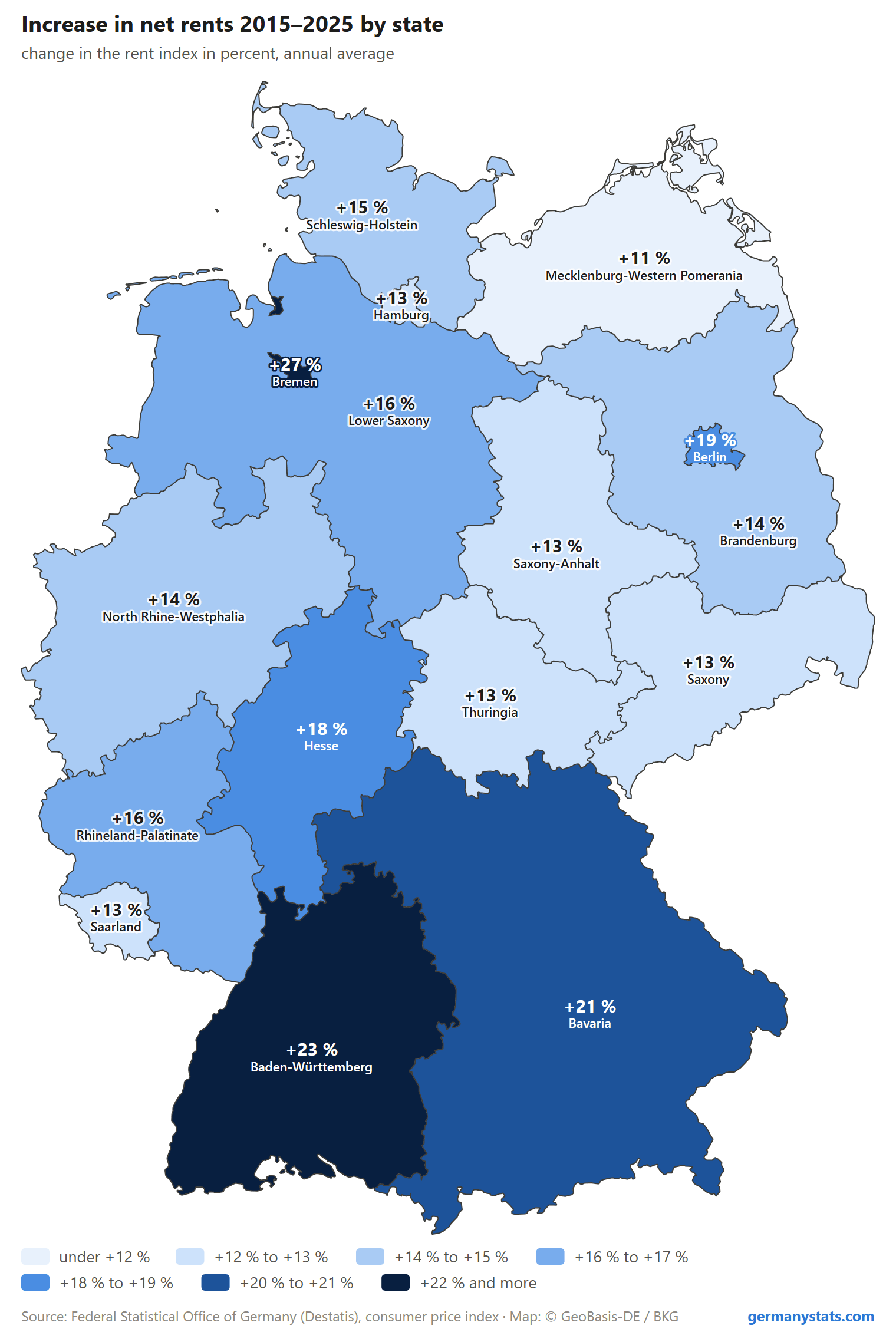
Since 2015, net rents have risen most in Bremen (+27 %) and Baden-Württemberg (+23 %), least in Mecklenburg-Western Pomerania (+11 %). The index shows the change, not the level of rents – a state with a small increase can still have high rents.
| State | since 2015 | since 2020 | long-term |
|---|---|---|---|
| Bremen | +26.9 % | +14.3 % | +53.9 % (since 2005) |
| Baden-Württemberg | +23.5 % | +12.9 % | +42.0 % (since 2005) |
| Bavaria | +20.6 % | +11.1 % | +41.4 % (since 2005) |
| Berlin | +18.6 % | +9.9 % | +38.2 % (since 2005) |
| Hesse | +17.5 % | +9.7 % | +34.1 % (since 2005) |
| Rhineland-Palatinate | +16.4 % | +9.9 % | +29.0 % (since 2005) |
| Lower Saxony | +15.7 % | +8.3 % | +29.4 % (since 2005) |
| Schleswig-Holstein | +15.5 % | +9.0 % | +15.5 % (since 2015) |
| Brandenburg | +14.1 % | +7.8 % | +20.3 % (since 2005) |
| North Rhine-Westphalia | +13.9 % | +7.6 % | +29.0 % (since 2005) |
| Thuringia | +13.4 % | +5.3 % | +22.1 % (since 2005) |
| Saarland | +13.2 % | +7.4 % | +21.1 % (since 2005) |
| Hamburg | +13.1 % | +6.9 % | +13.1 % (since 2015) |
| Saxony | +12.9 % | +9.1 % | +17.0 % (since 2005) |
| Saxony-Anhalt | +12.7 % | +6.9 % | +20.1 % (since 2005) |
| Mecklenburg-Western Pomerania | +10.7 % | +4.8 % | +17.0 % (since 2005) |
Related: Inflation rate in Germany, Households in Germany, Average salary in Germany and Gas prices in Germany.
Frequently asked questions
What is the average rent in Germany?
Tenant households paid an average of €7.40/m² net and €8.60/m² gross cold rent in 2022. Rents for new lets are usually much higher.
What percentage of income goes on rent in Germany?
On average 27.9 % of household net income (gross cold rent, 2022). 16 % of tenant households paid 40 % or more.
How much have rents risen in Germany?
According to the consumer price index, by 53 % since 1995 and by 10 % over the last five years.
Where have rents risen the most?
Among the federal states since 2015, in Bremen with +27 %.
Why are these rents lower than on property portals?
Official statistics cover all existing tenancies, including contracts that have run for many years. Portals show asking rents for new contracts, which are much higher, especially in large cities.