In short: On 30 June 2024, the German armed forces (Bundeswehr) had 167,500 career and fixed-term soldiers (2000: 186,600). Using NATO's definition, Germany spent €99.3 billion on defence in 2025 (2.2 % of GDP); the federal budget provides €108.2 billion for 2026. Official statistics show a lower €68.5 billion (2025) because they only record weapons and equipment when they are delivered. Around 15 % of soldiers are women.
How many soldiers does the Bundeswehr have?
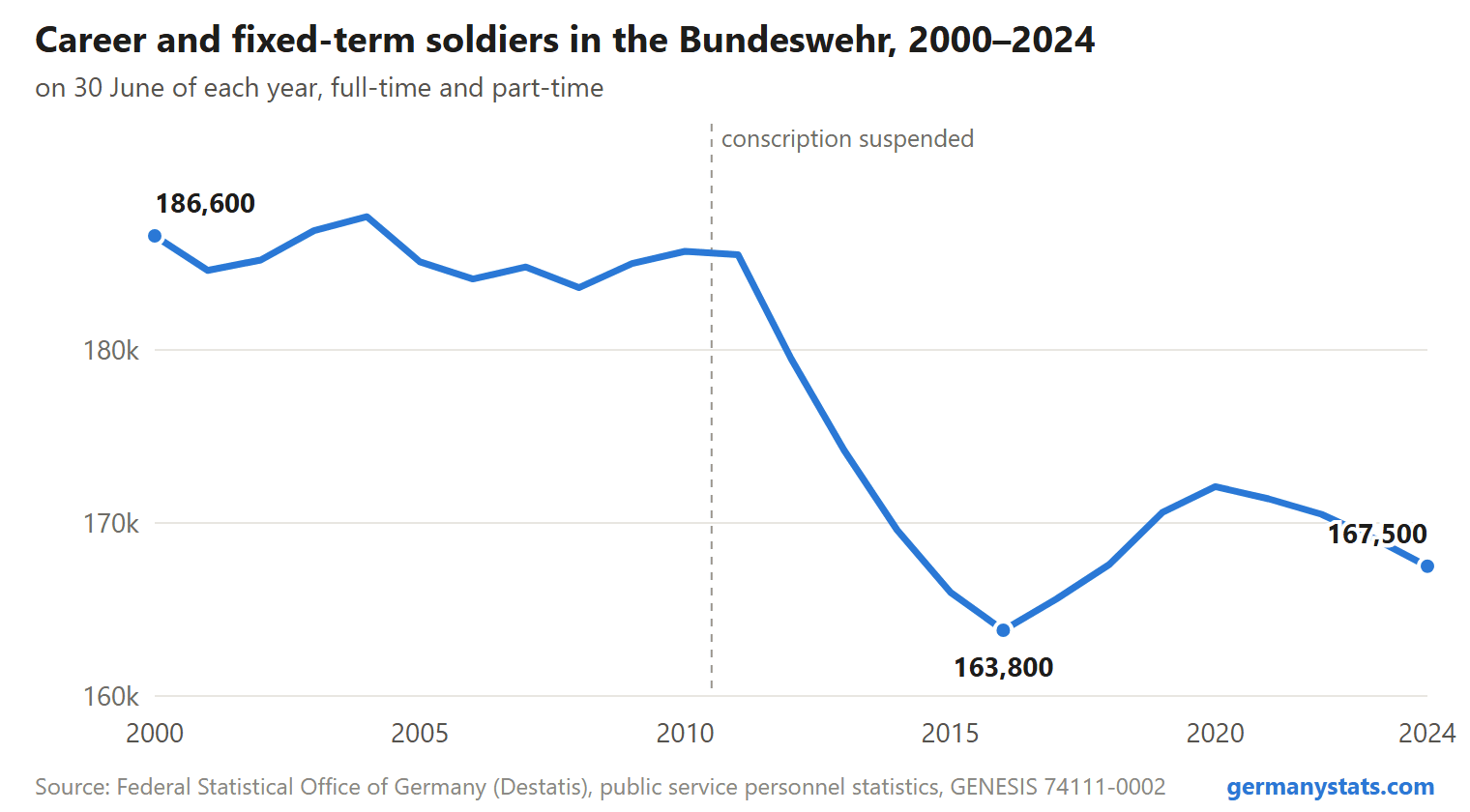
On 30 June 2024 there were 167,500 career and fixed-term soldiers. Until 2011 the number stayed almost unchanged at around 185,000. With the reorganisation of the Bundeswehr from 2011 it was reduced – in the same year compulsory military service was suspended. The low point was 163,800 in 2016. Recruitment then picked up again, reaching 172,100 in 2020. Since then the number has fallen slightly again despite efforts to recruit more personnel. Voluntary military service personnel and reservists are not included in these figures, which is why the Bundeswehr itself reports somewhat higher numbers of active soldiers.
| 30 June | Career and fixed-term soldiers | Change on previous year |
|---|---|---|
| 2000 | 186,600 | – |
| 2005 | 185,100 | −2,600 |
| 2010 | 185,700 | +700 |
| 2011 | 185,500 | −200 |
| 2015 | 166,000 | −3,600 |
| 2016 | 163,800 | −2,200 |
| 2019 | 170,600 | +3,000 |
| 2020 | 172,100 | +1,500 |
| 2021 | 171,400 | −700 |
| 2022 | 170,500 | −900 |
| 2023 | 169,100 | −1,400 |
| 2024 | 167,500 | −1,600 |
How much does Germany spend on defence?
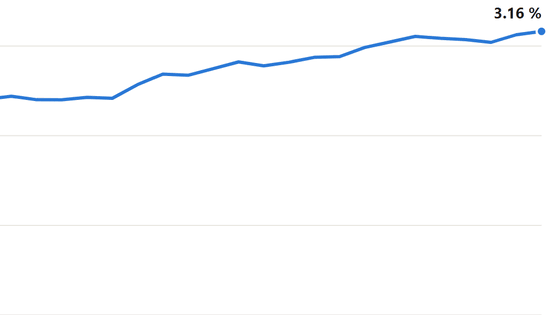
There are three different figures for defence spending, and they are often confused. The federal budget provides €108.2 billion for 2026: €82.7 billion in the defence budget (Einzelplan 14) and €25.5 billion from the Bundeswehr special fund. Using NATO's definition, which is used for the 2 % target, Germany spent €99.3 billion in 2025, 2.22 % of GDP; for 2026 Germany estimates €124.7 billion (2.69 %). NATO also counts, among other things, pensions for former soldiers and defence-related spending by other ministries. Official statistics (national accounts) show €68.5 billion for 2025 (1.5 % of GDP). The figure is lower because weapons, vehicles and aircraft are only recorded as spending when they are delivered – advance payments for equipment ordered from the special fund but not yet delivered are not counted – and because pensions are not classed as defence. On the other hand, this series goes back much further and is comparable over time, so the charts below are based on it. In 2025 it equalled 3.0 % of all government spending.
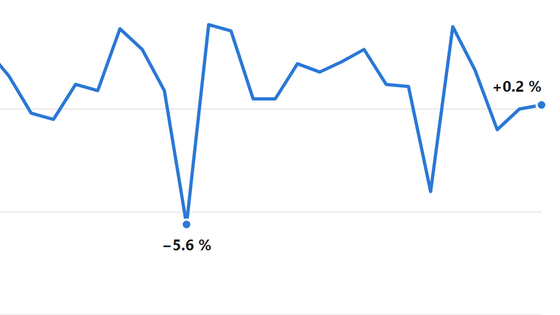
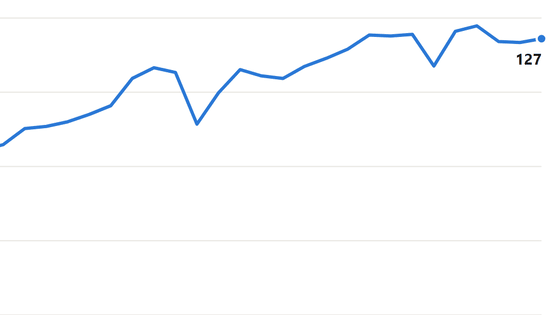
Until the mid-2010s spending stayed almost unchanged at €23 to 30 billion; in 2014 it amounted to only 0.9 % of GDP. Since then it has been rising, especially since Russia's invasion of Ukraine in 2022: the Bundestag approved a €100 billion special fund for the Bundeswehr, and since 2025 defence spending above 1 % of GDP has been exempt from Germany's debt brake. Even after adjusting for inflation, spending in 2025 was 92 % higher than in 2014.
| Definition | 2025 | 2026 |
|---|---|---|
| Federal budget (Einzelplan 14 + special fund) | – | €108.2 bn |
| Germany's NATO report | €99.3 bn (2.22 %) | €124.7 bn (2.69 %, estimate) |
| Official statistics (national accounts, COFOG 02) | €68.5 bn (1.5 %) | not yet published |
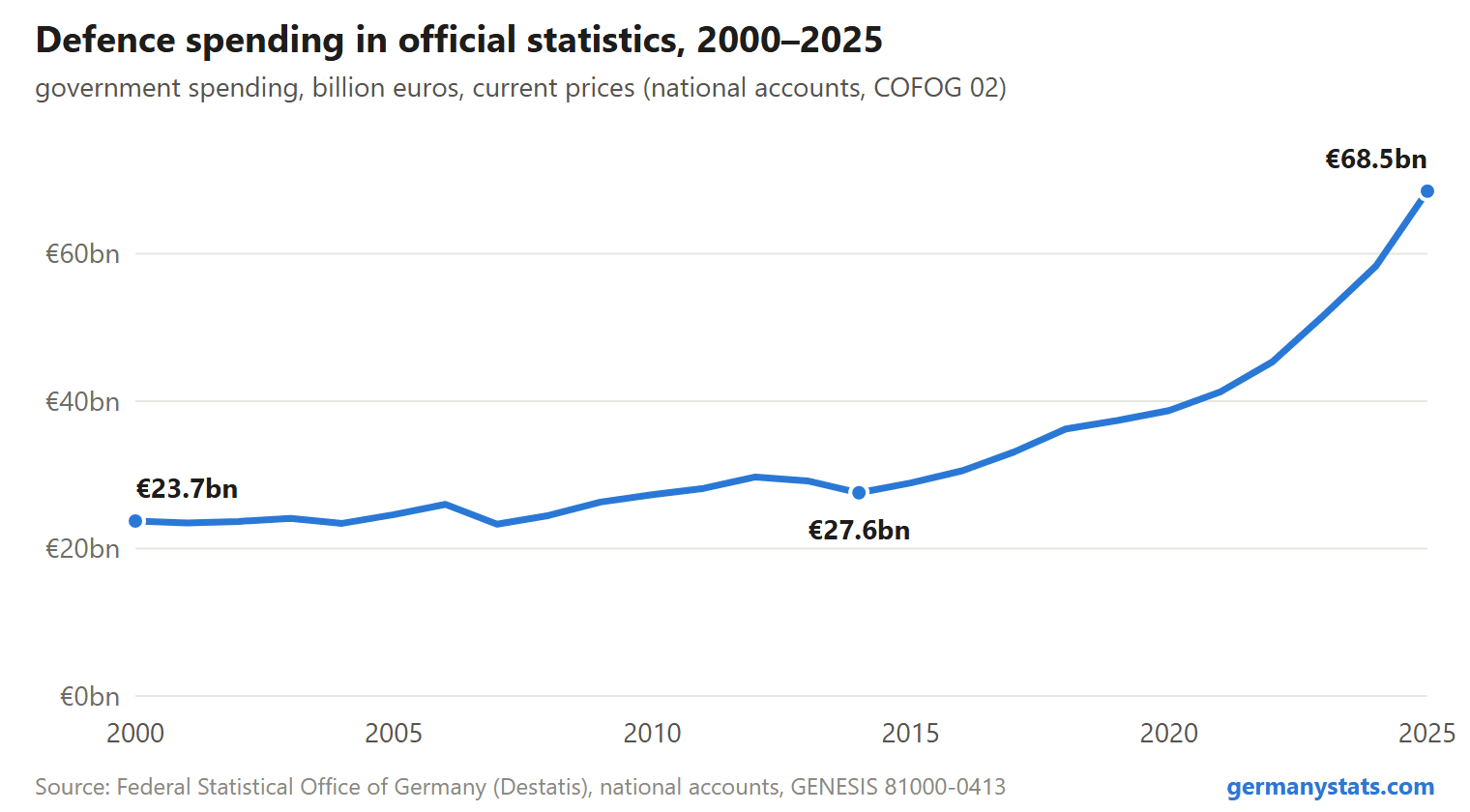
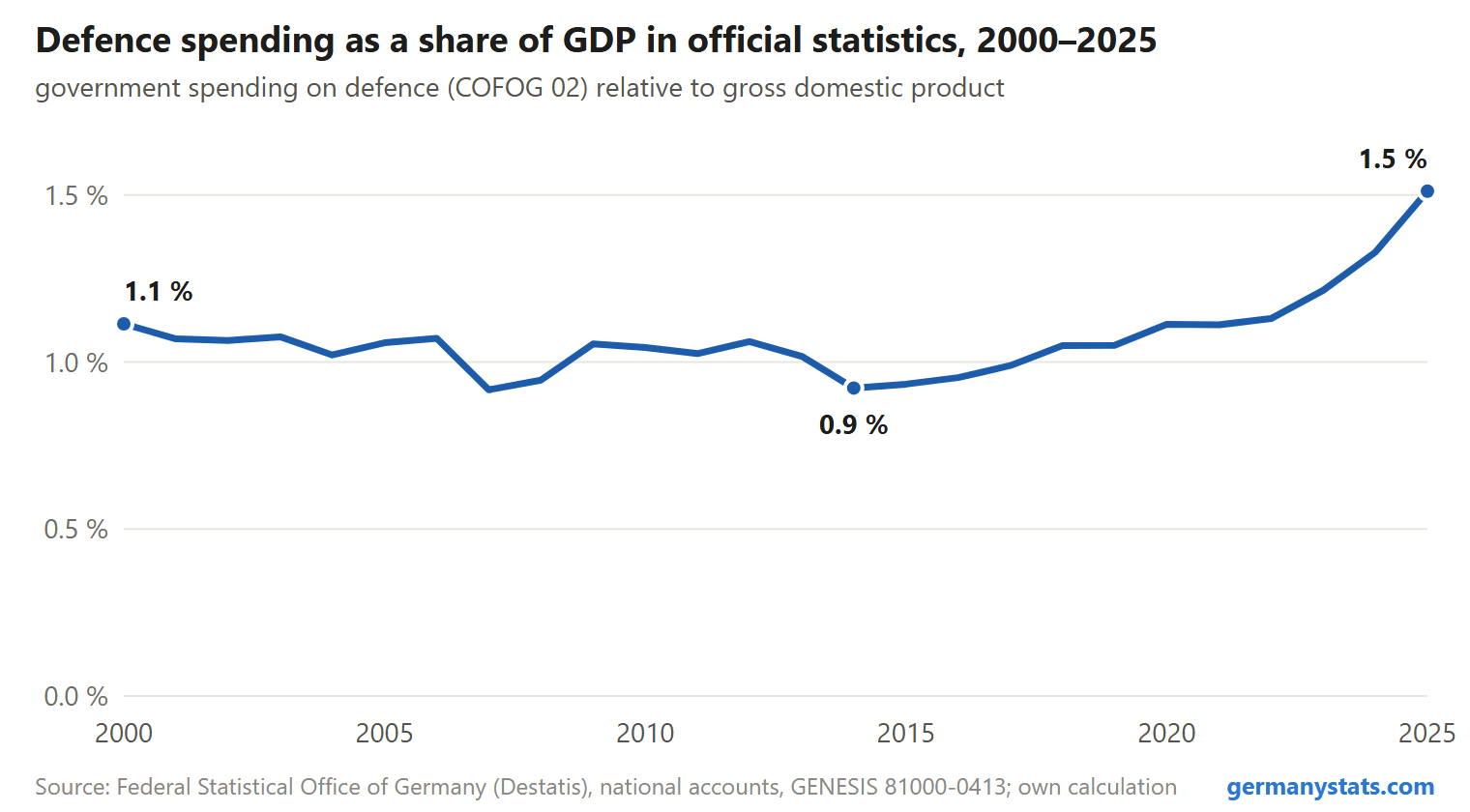
| Year | Spending (€ bn) | Share of GDP | Share of government spending |
|---|---|---|---|
| 2000 | 23.7 | 1.1 % | 2.3 % |
| 2005 | 24.6 | 1.1 % | 2.3 % |
| 2010 | 27.3 | 1.0 % | 2.2 % |
| 2015 | 28.9 | 0.9 % | 2.1 % |
| 2020 | 38.7 | 1.1 % | 2.2 % |
| 2021 | 41.3 | 1.1 % | 2.2 % |
| 2022 | 45.3 | 1.1 % | 2.3 % |
| 2023 | 51.7 | 1.2 % | 2.5 % |
| 2024 | 58.3 | 1.3 % | 2.7 % |
| 2025 | 68.5 | 1.5 % | 3.0 % |
What the money is spent on
Most of the money goes to military defence – personnel, equipment, weapons and running the armed forces: €51.2 billion in 2025. Foreign military aid has grown strongly, since 2022 mainly for Ukraine. It rose from €2.9 billion (2021) to €15.6 billion (2025) and now accounts for 23 % of defence spending. Defence research and development received €1.2 billion, civil defence (such as civil protection planning) €0.30 billion.
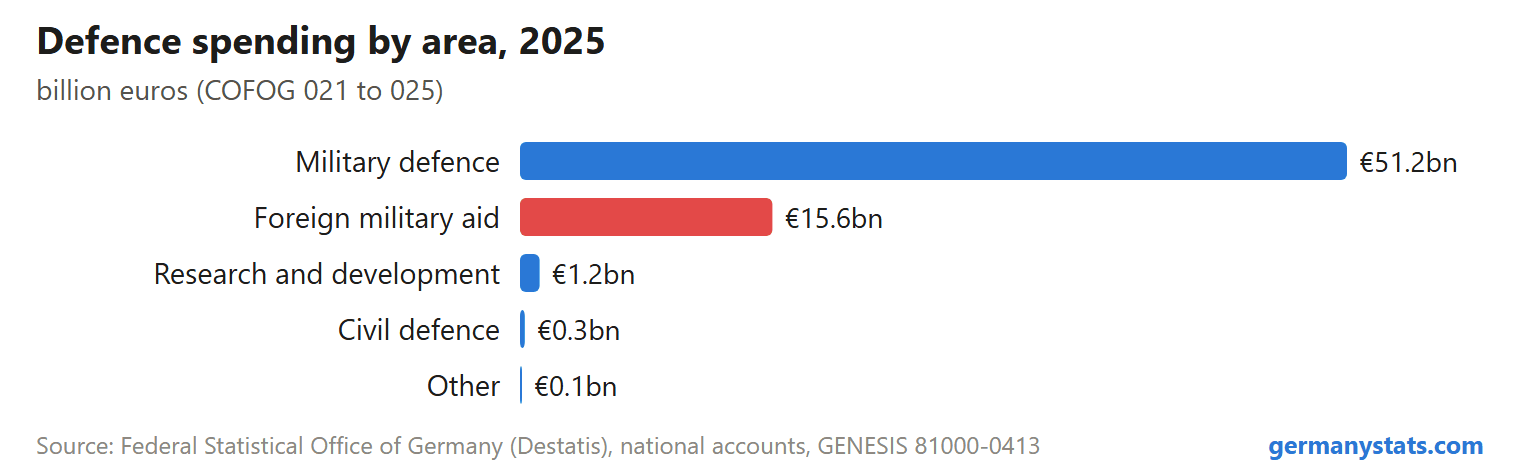
| Year | Military defence | Foreign military aid | Research and development | Civil defence |
|---|---|---|---|---|
| 2019 | 32.7 | 3.1 | 1.2 | 0.12 |
| 2020 | 33.7 | 3.2 | 1.2 | 0.13 |
| 2021 | 36.6 | 2.9 | 1.4 | 0.25 |
| 2022 | 37.5 | 5.5 | 1.9 | 0.28 |
| 2023 | 40.4 | 9.6 | 1.3 | 0.26 |
| 2024 | 45.2 | 11.6 | 1.2 | 0.27 |
| 2025 | 51.2 | 15.6 | 1.2 | 0.30 |
Women in the Bundeswehr
According to the microcensus, around 162,000 people worked as members of the regular armed forces in 2025, including 24,000 women – a share of 15 %. Women have been allowed to serve in all branches of the Bundeswehr since 2001; before that they were limited to the medical and music services. The microcensus is a sample survey and reports figures rounded to the nearest thousand, so the total differs slightly from the personnel statistics.
How much do soldiers earn?
In 2025, soldiers earned a median of €44,959 gross per year including special payments, and an average of €49,036. Pay differs greatly by rank group: commissioned officers had a median of €71,989, senior non-commissioned officers €51,479, junior non-commissioned officers €41,370 and enlisted ranks €35,836. Since 2022, median pay has risen by 17 %. Soldiers do not pay contributions to statutory pension or unemployment insurance, and career soldiers later receive a civil-service pension, so their gross pay can only partly be compared with other occupations.
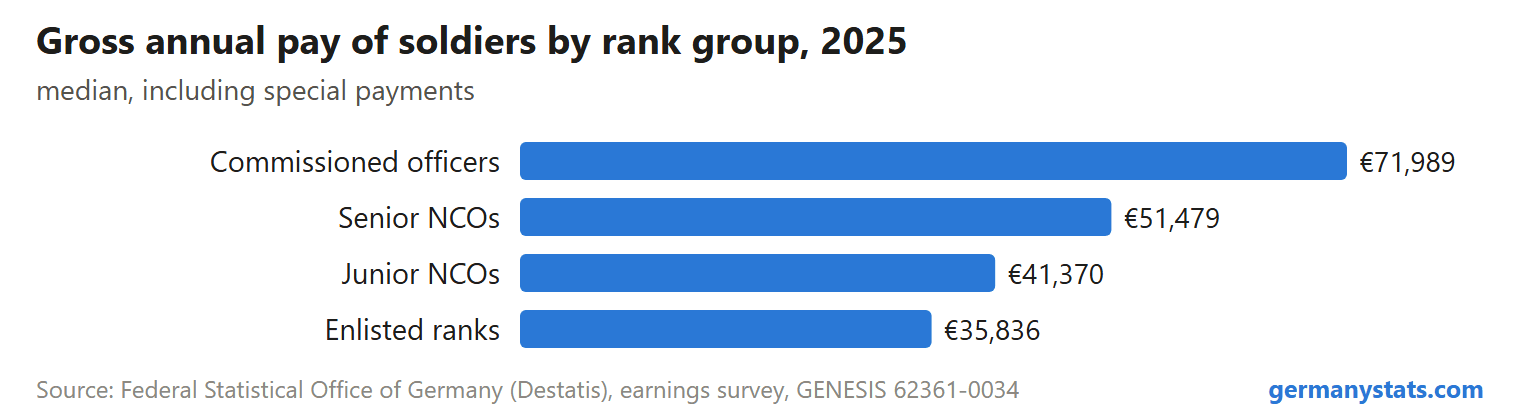
| Rank group | Median 2025 | Average 2025 | Median 2022 |
|---|---|---|---|
| Commissioned officers | €71,989 | €73,217 | €63,607 |
| Senior NCOs | €51,479 | €51,434 | €45,216 |
| Junior NCOs | €41,370 | €42,259 | €36,192 |
| Enlisted ranks | €35,836 | €37,051 | €31,388 |
| all soldiers | €44,959 | €49,036 | €38,586 |
Related: Germany GDP, Average salary in Germany and Population of Germany.
Frequently asked questions about the Bundeswehr
How many soldiers does Germany have?
On 30 June 2024 the Bundeswehr had 167,500 career and fixed-term soldiers. Voluntary military service personnel are not included in these statistics.
How much does Germany spend on defence?
The 2026 federal budget provides €108.2 billion for defence, including €25.5 billion from the special fund. Using NATO's definition, spending was €99.3 billion in 2025. Official statistics show €68.5 billion for 2025 because they only record military equipment when it is delivered.
Does Germany meet NATO's 2 % target?
Yes. Using NATO's definition, defence spending was 2.22 % of GDP in 2025, and Germany estimates 2.69 % for 2026. Germany aims to reach 3.5 % by 2029.
How many women serve in the Bundeswehr?
According to the 2025 microcensus around 24,000, about 15 % of soldiers.
How much does a German soldier earn?
A median of €44,959 gross per year (2025). Commissioned officers earned €71,989, enlisted ranks €35,836.
Does Germany still have conscription?
Compulsory military service has been suspended since 1 July 2011, but not abolished. Since then only volunteers have served in the Bundeswehr.
Are there figures by federal state or base?
The official databases GENESIS and the Regional Database contain no figures on soldiers by state or district, so there is no map on this page.