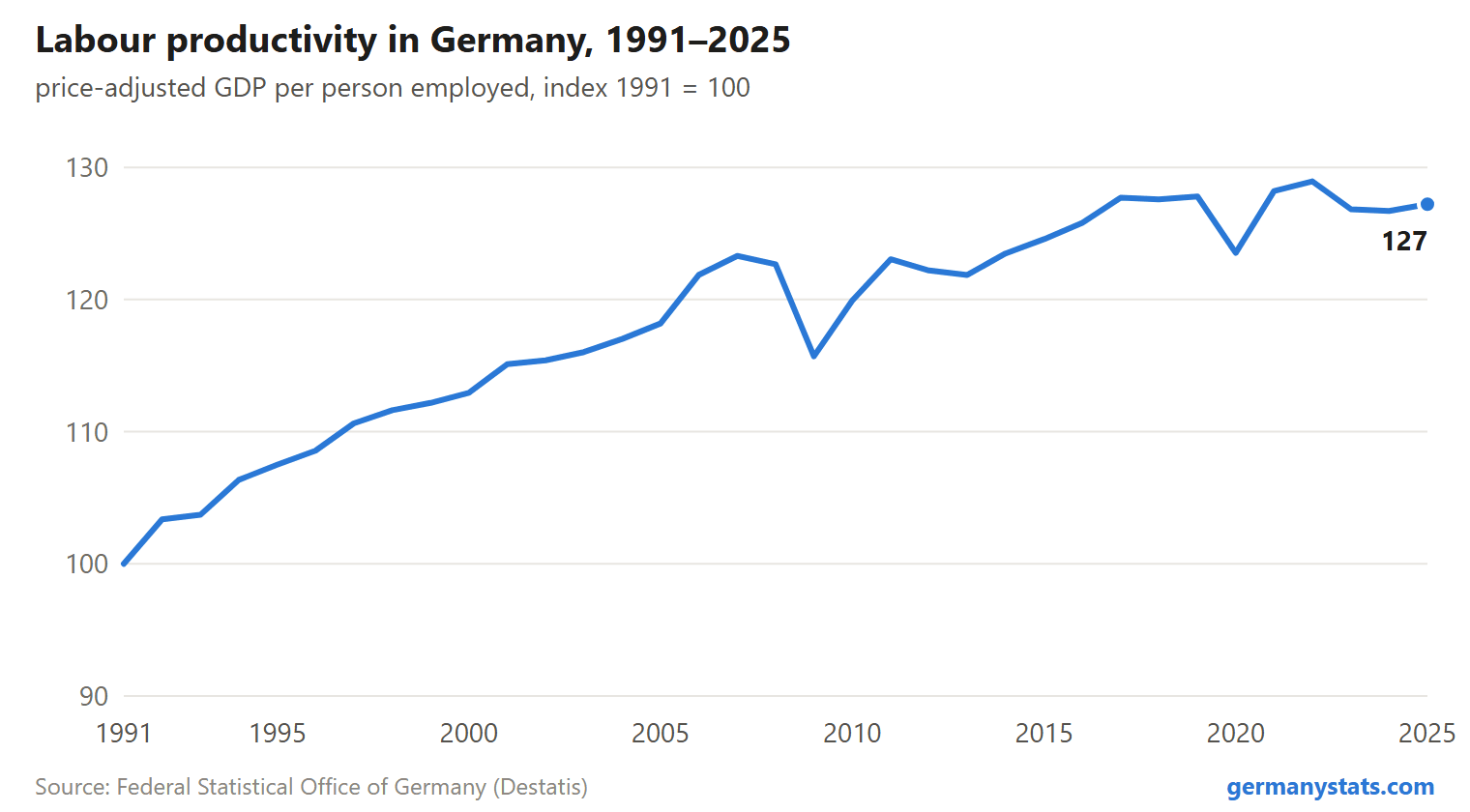
In short: In 2025, each person in work in Germany produced an average of €98,734 of GDP (current prices). Adjusted for prices, productivity has risen by 27 % since 1991, but growth has slowed sharply: from 1.3 % a year (1991–2007) to 0.3 % (2007–2019) and −0.1 % since 2019.
Labour productivity since 1991
Rising productivity is the main source of higher wages and prosperity. Since 2019 Germany's productivity per person employed has even declined slightly: employment kept rising while output stagnated. Economists point to the energy crisis, the weakness of industry, low investment and job growth in services with lower value added.
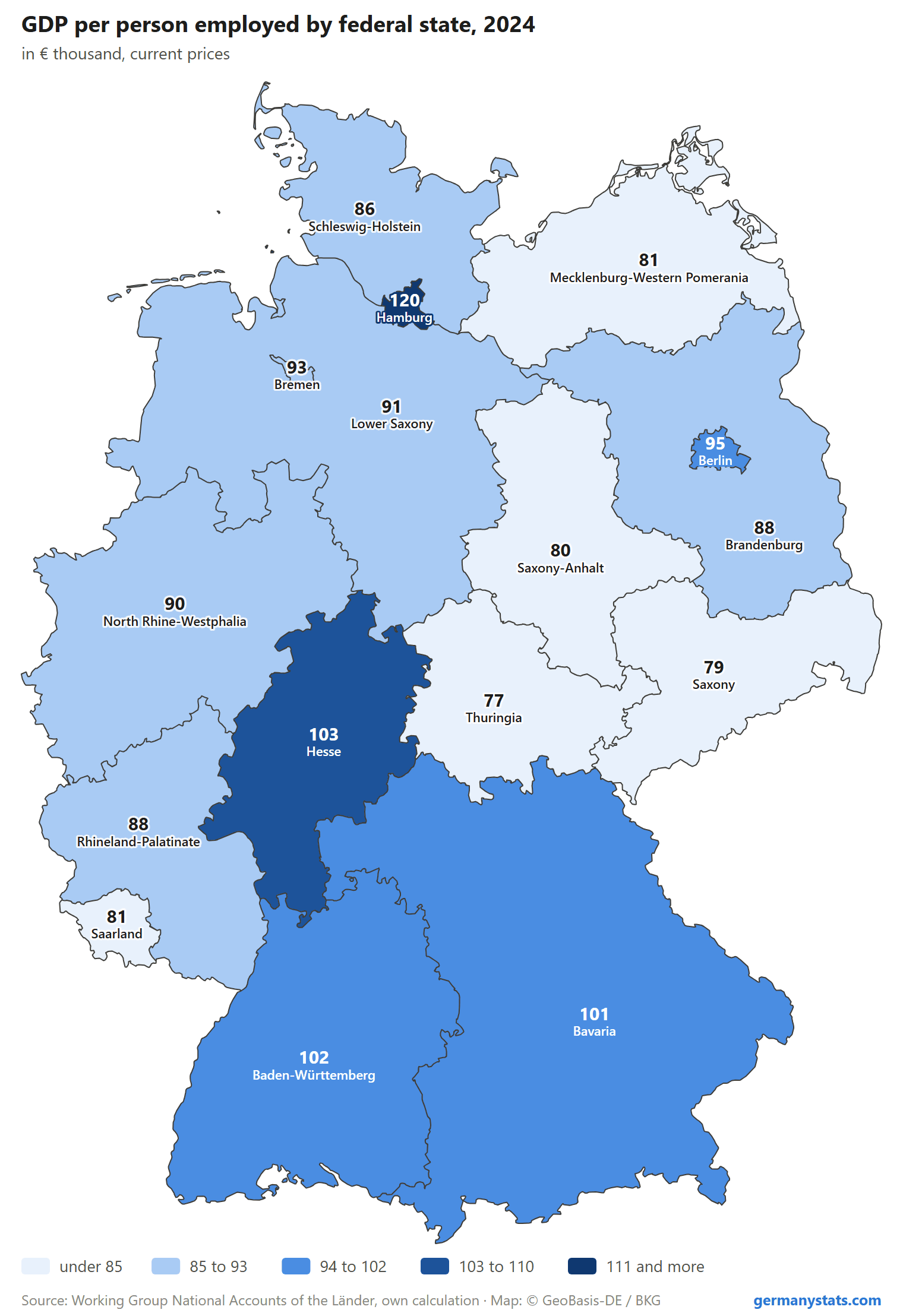
Productivity by federal state
Hamburg has the highest output per person employed (€119,870 in 2024), Thuringia the lowest (€76,569).
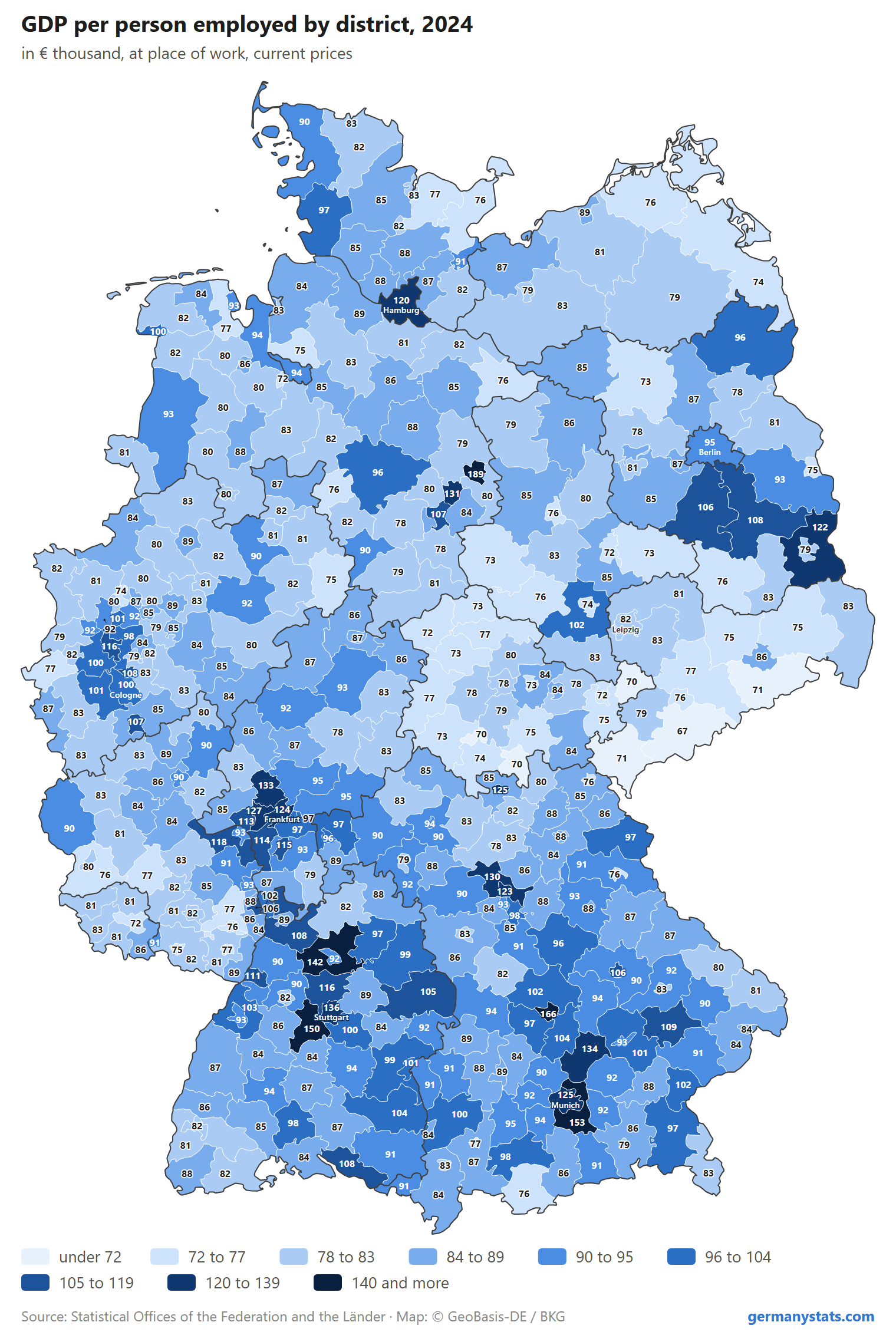
Productivity by district
Industrial locations lead: Wolfsburg (€189,312), Ingolstadt (€166,183) and Munich district (€153,281). Part-time jobs count like full-time jobs, so regions with many part-time positions show lower values.
Related: Germany GDP, Average salary in Germany and Research and development in Germany.