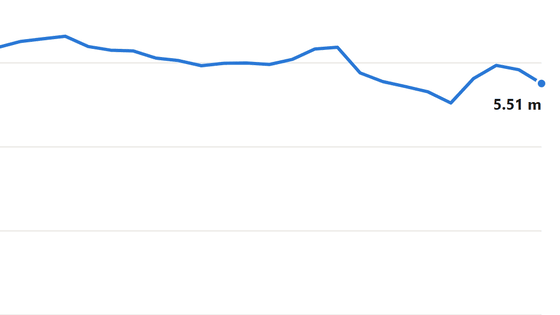
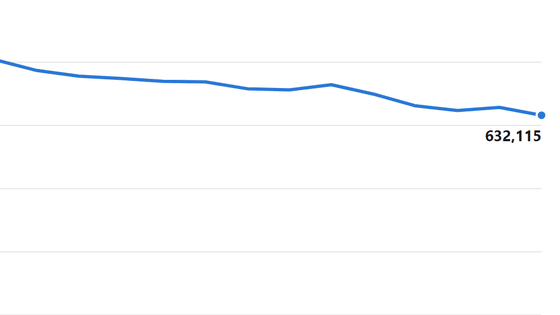
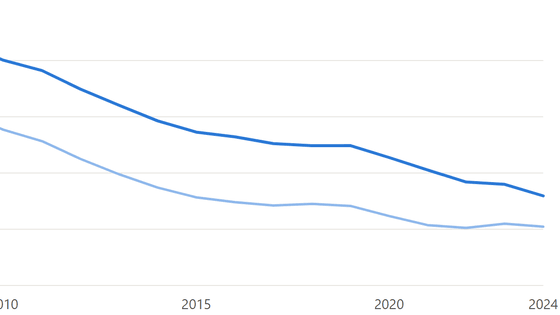
In short: In 2024, 162,384 people were finally convicted of road traffic offences in Germany (2023: 165,934). That is 194.3 per 100,000 inhabitants. In 2007 there were 211,846 convictions; since then the number has fallen by 23 %.
What counts as road traffic offences?
This covers convictions for criminal road traffic offences: drink-driving and endangering road traffic, leaving the scene of an accident (hit-and-run), negligent homicide and bodily harm in traffic, and driving without a licence under the Road Traffic Act. They are one of the largest groups of all convictions.
Road traffic offences: convictions in Germany since 2007
Figures for the whole of Germany are available from 2007. Since then, convictions for road traffic offences have decreased from 211,846 to 162,384 (−23 %). The highest number was 211,846 in 2007.

| Year | Convictions | per 100,000 | under the Criminal Code | under the Road Traffic Act |
|---|---|---|---|---|
| 2007 | 211,846 | 257.7 | 161,890 | 49,956 |
| 2010 | 174,558 | 213.5 | 130,709 | 43,849 |
| 2015 | 151,039 | 183.8 | 108,517 | 42,522 |
| 2020 | 167,968 | 202.0 | 112,053 | 55,915 |
| 2023 | 165,934 | 198.8 | 110,946 | 54,988 |
| 2024 | 162,384 | 194.3 | 107,177 | 55,207 |
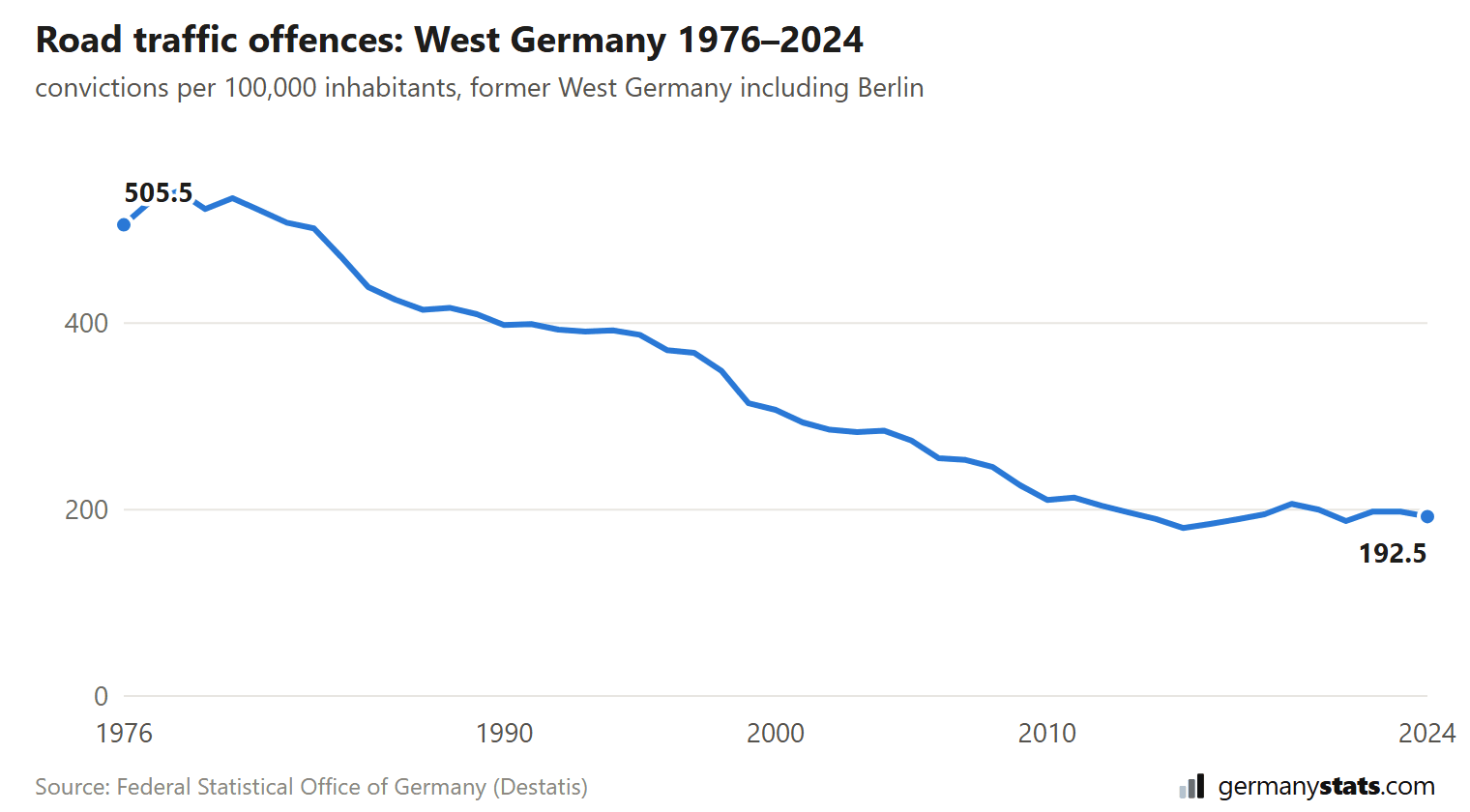
Long-term trend in West Germany since 1976
For eastern Germany, data only exist from 2007. The series for former West Germany including Berlin goes back without a break to 1976: 310,572 people were convicted of road traffic offences then (505.5 per 100,000 inhabitants), 137,015 in 2024 (192.5). The peak was 332,044 in 1978.
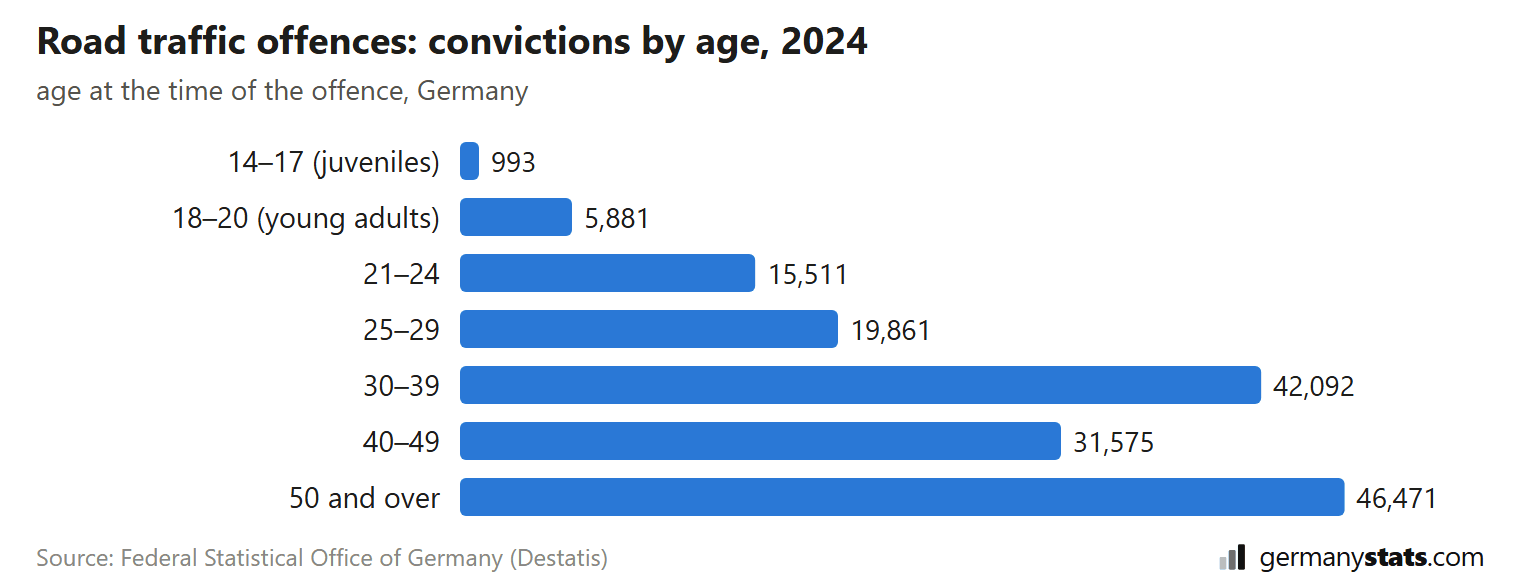
Convictions by age
4 % of those convicted of road traffic offences in 2024 were under 21 (juveniles aged 14 to 17 and young adults aged 18 to 20). Note that the age groups differ in width.
Men, women and nationality
84 % of those convicted in 2024 were men and 16 % women. 39 % did not hold German citizenship (2007: 16 %); for comparison, around 15 % of Germany's residents are foreign nationals. Foreign residents are on average younger and more often male – both characteristics associated with higher conviction rates – so the figures say little about the effect of nationality itself.
| Year | Men | Women | Germans | Foreign nationals | Share foreign |
|---|---|---|---|---|---|
| 2007 | 182,521 | 29,325 | 178,392 | 33,454 | 16 % |
| 2010 | 148,527 | 26,031 | 145,044 | 29,514 | 17 % |
| 2015 | 126,691 | 24,348 | 114,757 | 36,282 | 24 % |
| 2020 | 141,651 | 26,317 | 110,179 | 57,789 | 34 % |
| 2023 | 139,524 | 26,410 | 104,575 | 61,359 | 37 % |
| 2024 | 136,204 | 26,180 | 99,128 | 63,256 | 39 % |
Related: Convictions in Germany, Electric cars in Germany and Crime in Germany.
Frequently asked questions
How many people are convicted of road traffic offences in Germany?
162,384 people in 2024, or 194.3 per 100,000 inhabitants (2023: 165,934).
Are there more convictions for road traffic offences than in the past?
Since 2007 the number has changed by −23 %. In West Germany it was 505.5 per 100,000 inhabitants in 1976 and 192.5 in 2024. Convictions reflect not only crime but also reporting behaviour, investigations and changes in the law.
What share of those convicted are men?
84 % in 2024.